
Enhance Patient Care and Reduce Fatigue with Mobility-Focused Tactical Armor
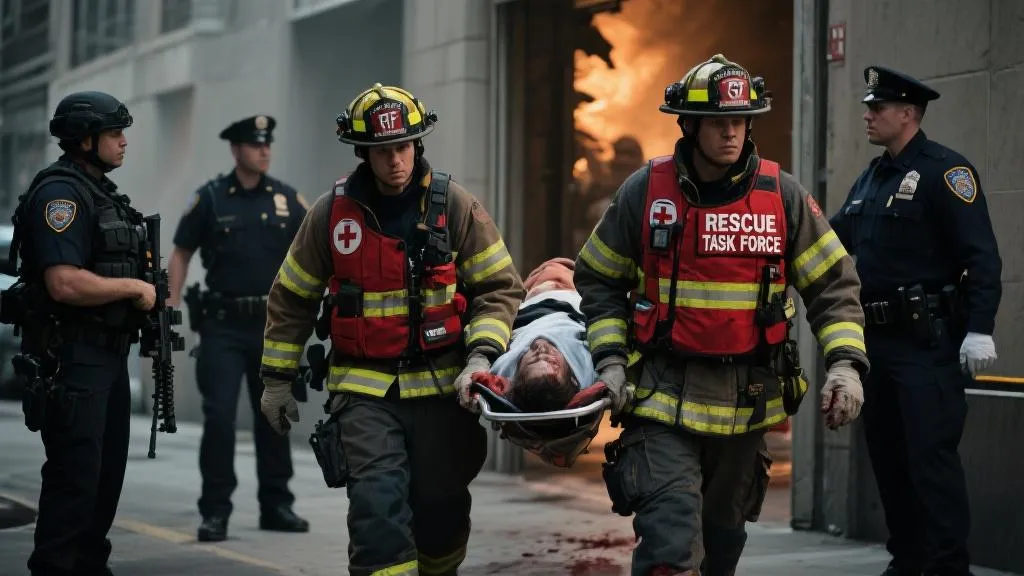
You are kneeling on the pavement or the floor of a chaotic scene, trying to establish an airway or pack a junctional wound. Your heart rate is already elevated from the run in, but now you are fighting a secondary battle against your own equipment. The ballistic plate digs into your throat when you lean forward. The cummerbund restricts your ability to rotate your torso to grab a tourniquet from your belt. You feel heavy, boxed in, and clumsy. In a profession where dexterity and speed are the difference between a save and a statistic, feeling like a turtle on its back isn't just uncomfortable—it is dangerous.
The weight of the trade-off
This is the silent frustration that echoes through station houses and training grounds across the country. There is a prevailing belief that to be safe in a high-threat environment, you must sacrifice your agility. The logic seems sound on the surface: higher protection levels require heavier plates and more coverage, which inevitably limits range of motion. You accept the bulk because the alternative is entering a warm zone unprotected.
However, the real objection here isn't about safety ratings; it’s about performance. "I cannot provide the highest standard of patient care if my gear is fighting me every step of the way."
When you are forced to wear armor designed for static defense or law enforcement entry teams—whose primary mission is neutralization, not treatment—you are wearing tools built for a different trade. The internal conflict arises when you realize that the very equipment meant to ensure your survival might be hindering your ability to ensure someone else’s. You start to view the armor as a liability, a heavy tax you have to pay to do your job, rather than an asset that facilitates it.
If this friction remains unaddressed, the consequences compound far beyond a single uncomfortable shift. Over time, the physical toll of wearing ill-fitting, excessive weight leads to accelerated fatigue. When you are physically exhausted, cognitive bandwidth narrows. You might miss a subtle clinical sign because you are too distracted by the pain in your lower back or the heat trapped against your core.
On a career level, this acceptance of "good enough" gear creates a ceiling for the entire Rescue Task Force discipline. If the next generation of tactical medics accepts that being slow and encumbered is just part of the deal, the evolution of tactical medicine stalls. We risk normalizing a standard where the medic is the slowest member of the stack, dependent on others for mobility assistance, rather than being a self-sufficient operator capable of keeping pace with the dynamic nature of a hostile event. The long-term result is a workforce that burns out faster, plagued by preventable musculoskeletal injuries, and a tactical capability that never quite reaches its full potential because the human element is being crushed by the hardware.
See how the right equipment can change your operational reality.
The shift happens when we stop looking at body armor as a generic commodity and start treating it as a specialized medical tool, just like a video laryngoscope or a high-performance ventilator. The solution lies in recognizing that the biomechanics of a medic are fundamentally different from those of a SWAT operator. You need to bend, twist, kneel, lift, and drag. You need a range of motion that allows for fine motor skills even while under ballistic protection.
Tactical Medicine helps bridge this gap by prioritizing modularity and medic-specific cuts. This isn't about removing protection; it is about redistributing it. Modern engineering allows for plates and carriers that offer the necessary NIJ-rated stopping power without the bulk that immobilizes your shoulders and waist. By utilizing advanced lightweight materials and ergonomic designs that favor the "shooter’s cut" or "swimmer’s cut"—which frees up the arms and chest for medical interventions—the gear begins to work with your body rather than against it.
This approach acknowledges that your survivability is linked to your mobility. If you can move faster, you are a harder target. If you can treat faster, you get off the X faster. The armor becomes a system that enhances your capability, allowing you to focus entirely on the patient rather than adjusting your straps every thirty seconds.
- Anatomical Ergonomics: Carriers designed with deep shoulder cuts allow for full arm extension and rotation, critical for intubation or chest tube insertion.
- Weight Reduction: Advanced polyethylene and ceramic composites can shave pounds off your loadout, preserving your energy for the extraction.
- Modular Loadouts: Laser-cut MOLLE systems allow you to position medical pouches where you need them for muscle-memory access, not where a rifleman would place magazines.
- Breathability: Structural airflow channels reduce heat stress, keeping your cognitive function sharp during prolonged operations.
- Scalability: Options to add or remove throat, groin, and shoulder protection based on the specific threat level of the call.
For the brand-aware professional, the next step isn't necessarily a blind purchase, but a hands-on evaluation. It is about understanding what "good" actually feels like. The skepticism you feel toward armor is likely born from years of wearing hand-me-down vests or lowest-bidder municipal gear. The only way to dissolve that skepticism is to experience the difference in weight distribution and cut for yourself.
You might wonder if specialized gear is worth the investment, or if it’s just "tacticool" marketing. But consider the cost of the alternative—early retirement due to back issues or a compromised scene because you couldn't move fast enough. Others might worry about department standardization. However, many agencies are now moving toward approved vendor lists that allow individual operators to select gear that meets safety standards while offering better performance.
This is about reclaiming your agency as a provider. You are the one in the warm zone. You are the one carrying the bag and the patient. You deserve equipment that respects the physical reality of your mission. By demanding gear that matches the sophistication of your medical training, you set a new standard for what it means to be a tactical medic in the United States.
Explore the specifications that define the future of rescue task force operations.
