
Become a Tactical Athlete by Aligning Your Armor with Rescue Biomechanics
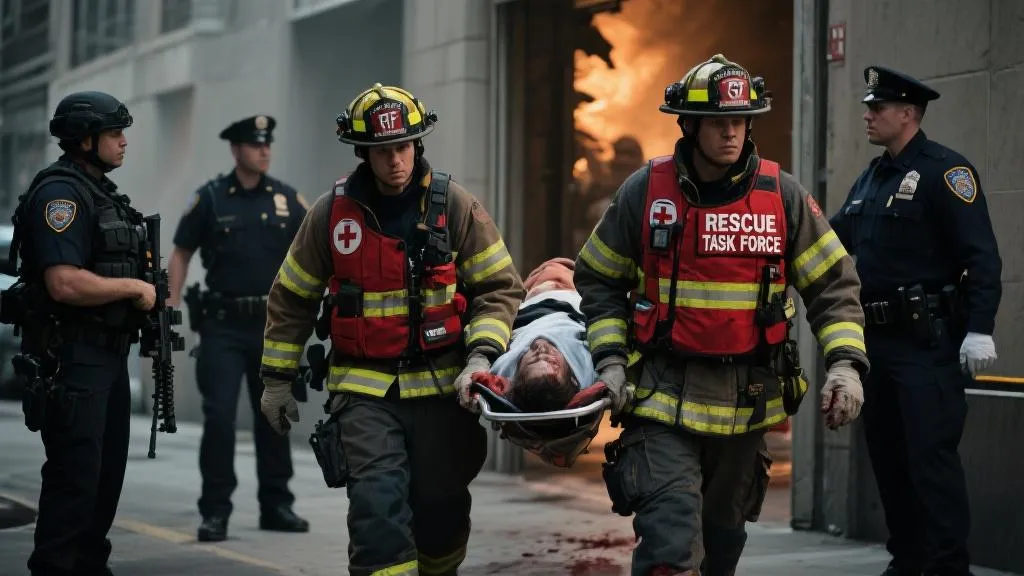
There is a version of you that exists just beyond your current reality. In this vision, you are not merely a participant in the chaos, but a master of it. You move with a fluidity that contradicts the gravity of the situation, navigating tight corridors and debris-filled warm zones with the precision of an athlete. In this state, your mind is entirely silent, save for the clinical algorithm running in the background. You are not fighting your equipment, nor are you questioning your safety. You are entirely present, a seamless integration of medicine and tactics. This is the operator you were meant to be, yet for too long, you have been tethered to a lesser identity by equipment that treats your role as an afterthought.
The gap between who you are and who you could be is often measured in ounces, inches, and degrees of motion. Right now, you might feel the weight of that gap every time you kit up. You put on a vest that was likely designed for a static shooting stance, not for the dynamic, contorted reality of patient care. When you kneel to apply pressure or reach across your body for a tourniquet, the gear fights back. It digs in, it shifts, and it exposes you. This physical resistance creates a subtle psychological drag. It whispers that you are an impostor in the tactical environment, a guest who doesn't quite belong in the stack. When you feel cumbersome, you hesitate. And in your line of work, hesitation is the enemy of both survival and salvation.
Redefining your role in the warm zone
The transition to the next generation of tactical medicine requires more than just new training protocols; it demands a fundamental shift in how you view your physical presence in high-stakes environments. The "old you" accepts the hand-me-down plate carrier or the generic armor that treats a paramedic like a smaller, unarmed police officer. That identity is reactive. It accepts discomfort as a badge of honor rather than a solvable problem. However, the evolution of the Rescue Task Force concept demands a new archetype. You are becoming a tactical athlete, a specialized professional who needs armor that protects without prohibiting the very job you are there to do.
When you align your gear with your true purpose, the psychological shift is immediate. Imagine stepping into armor that was engineered specifically for the biomechanics of rescue. Suddenly, the physical barrier between you and your patient vanishes. You are no longer "the medic in the back struggling to keep up"; you are a lethal asset to the team, not because you carry a weapon, but because you carry the capability to sustain life under fire without becoming a liability. This shift in equipment acts as a catalyst for a shift in mindset. You stop worrying about your exposure and start focusing entirely on the mission. You project a quiet confidence that your law enforcement counterparts recognize instantly. You look the part, you feel the part, and consequently, you perform the part.
- From encumbered to agile — Shedding the bulk allows you to move through the warm zone with speed and grace, transforming you from a slow-moving target into a dynamic operator.
- From distracted to clinically focused — When you aren't fighting your kit, your cognitive bandwidth opens up, allowing for faster assessments and more precise interventions.
- From outsider to integrated partner — Wearing professional, purpose-built gear signals to the entry team that you take your survival and your role as seriously as they take theirs.
- From reactive to ready — The confidence that comes with superior protection allows you to step forward when others step back, bridging the gap between safety and the patient.
Consider the profound difference in your daily reality when you embrace this evolution. Picture a chaotic scene where every second bleeds away life. In your old identity, the physical exertion of running with ill-fitting plates spikes your heart rate before you even touch the patient. Your fine motor skills degrade as your body fights the bulk. But in your new identity, you arrive fresh. The weight is distributed so effectively it feels like a second skin. You drop to a knee, and the armor moves with you, maintaining coverage without choking your mobility. You are calm. You are efficient. The people around you—the officers, the victims—sense this shift. They see someone who is in total control of their environment. This isn't just about comfort; it is about the authority you command when your equipment matches your expertise.
The standard you set for yourself
Fear of this transformation often stems from a misplaced sense of tradition or a reliance on "how it’s always been done." It is easy to stay in the comfort zone of standard issue gear, telling yourself that the struggle is just part of the job. But deep down, you know that the industry is changing. The threats are becoming faster, more complex, and more frequent. To cling to the old identity is to choose obsolescence. Embracing specialized body armor for fire and rescue is an acknowledgment that you value your life and your patient's life enough to demand the best tools available. It is a declaration that you are not just an observer of the tactical world, but a key player in its future.
This evolution is personal. It is about looking in the mirror and seeing a professional who is prepared for the worst day of someone else's life. It is about going home at the end of the shift with your body intact and your mind clear, knowing you didn't have to fight your own equipment to do your job. The next generation of tactical medics is already rising, defined by their refusal to compromise on mobility or protection. They are smarter, faster, and better equipped. You are already one of them in spirit; it is time your physical reality caught up to your ambition.
You do not need to make a leap of faith to start this transformation. You simply need to be willing to explore what is possible when design meets function. The first step is not a purchase, but a realization that better exists and that you deserve to operate at that level. By familiarizing yourself with the advancements in protection tailored for your specific mission profile, you begin the mental transition from who you were to who you are becoming.
Discover the gear that defines the future of the rescue task force.
