
Upgrade Your Tactical Armor to Enhance Mobility and Patient Care
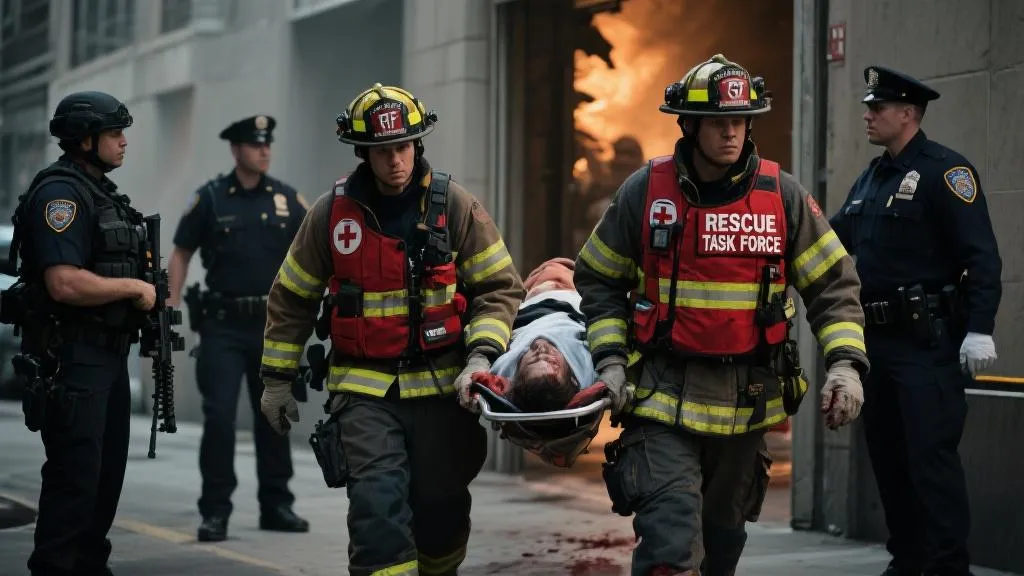
You stand at the edge of the staging area, the static of the radio humming in your ear, waiting for the command that sets everything in motion. There is a distinct heaviness in the air, a tension that has nothing to do with the weight on your shoulders but everything to do with the responsibility you carry. You are not just a spectator to chaos; you are the one trained to bring order to it. You look at the gear stacked around you, the standard-issue equipment that has been passed down through budget cycles and administrative decisions. It works, technically. It stops threats, theoretically. But deep down, in the quiet moments before the breach or the rush into the warm zone, you sense a friction. There is a nagging feeling that your potential is being capped, not by your skills or your drive, but by the very armor meant to keep you safe. You are standing on the threshold of a realization that the old way of operating is no longer enough for the new breed of threats you face.
The call to adventure rarely comes as a shout; it usually arrives as a whisper of necessity. The landscape of emergency response has shifted beneath your feet. The lines between a medical call and a tactical operation have blurred, giving rise to the Rescue Task Force model where speed is just as critical as shielding. You are part of a generation that views paramedicine not as a static trade but as a dynamic, athletic pursuit. You are a tactical athlete, expected to sprint, climb, kneel, and drag, all while performing complex medical interventions under fire. The call is clear: you need to evolve. The heavy, restrictive "turtle shells" of the past are anchors in a world that demands agility. The mission is asking more of you—more speed, more endurance, more precision—and deep down, you know that meeting that demand requires a fundamental change in how you equip yourself for the fight.
Yet, hesitation is natural. The familiarity of the old gear offers a strange, uncomfortable comfort. It is what you know. There is a safety in the status quo, a resistance to breaking away from the "this is how we’ve always done it" mentality that permeates station houses and command centers. You might worry that lighter gear means less protection, or that seeking out specialized equipment is an act of vanity rather than necessity. The voice of doubt suggests that maybe you should just toughen up and deal with the fatigue, the restricted range of motion, and the sweat-soaked exhaustion that comes halfway through a deployment. It is easier to remain in the ordinary world of heavy plates and ill-fitting carriers than to step into the unknown territory of high-performance gear.
But there comes a breaking point where the desire for excellence outweighs the comfort of complacency. It happens when you realize that every ounce of unnecessary weight is energy stolen from your patient. It happens when you understand that mobility is survivability. This is the moment you choose to cross the threshold. You decide that you are not just a carrier of equipment, but an operator who demands gear that functions as an extension of your own body. You choose to leave behind the clumsy constraints of the past and seek a solution that honors the physical and mental demands of your role. You stop accepting "good enough" and start demanding the standard required for the high-stakes environment you operate in.
This is where Tactical Medicine’s Body Armor for Firefighters and Rescue Task Forces enters your narrative. It appears not as a magic wand that solves every problem, but as the precision tool you have been waiting for—a mentor in material form. Designed specifically for the unique hybrid role of the tactical medic, this armor understands the duality of your mission. It offers the ballistic protection you need to enter the warm zone with confidence, but it sheds the bulk that hinders patient care. It is the guide that shows you a new way to move. With modular attachment points that make sense for medical load-outs and a cut that allows you to intubate, apply tourniquets, and lift patients without fighting your own vest, it validates your identity as a specialized professional. It supports your journey by removing the physical barriers between you and your objective.
As you integrate this new capability into your routine, the challenges of the job begin to look different. The obstacles—the flights of stairs, the tight corridors, the prolonged standoffs—are still there, but your relationship to them changes. When you run, the gear moves with you, not against you. When you kneel to assess a casualty, the armor doesn't ride up and choke you; it sits properly, protecting your vitals while granting you the flexibility to work. Each deployment becomes a lesson in efficiency. You find that you have more gas in the tank at the end of an operation. The fatigue that used to cloud your judgment diminishes, replaced by a sharper, clearer focus. You are testing your limits, and for the first time, your equipment is helping you push past them rather than holding you back.
The transformation is internal as much as it is external. You begin to see yourself differently. You are no longer just a medic in a vest; you are a highly capable asset in a complex tactical environment. The confidence that comes from knowing your gear is optimized for your specific mission profile bleeds into your performance. You move with greater purpose. The hesitation that once existed before entering a volatile scene is replaced by a calculated readiness. You have become the Next-Gen Tactical Medic in truth, embodying the fusion of medical expertise and tactical proficiency. You have shed the identity of the overburdened responder and stepped into the role of the agile lifesaver.
Eventually, you return to your unit, but you do not come back the same. You bring with you a new standard of performance. Your energy and your efficiency become a beacon for others who are still struggling under the weight of outdated equipment. You become a leader, not necessarily by rank, but by example. You show the rookies and the veterans alike that it is possible to be protected without being paralyzed by weight. By prioritizing your mobility and your ability to provide care, you elevate the capability of your entire team. You demonstrate that the future of tactical medicine isn't just about better medicine; it's about better delivery systems, starting with the human factor.
This arc of growth—from the frustration of the old ways to the empowerment of the new—is the path of every pioneer in this field. It is a journey from being weighed down to being unlocked. The challenges of the modern world are not getting any lighter, and the threats are not getting any slower. The only variable you can control is your own readiness. You have the agency to decide whether you will continue to fight your gear or whether you will equip yourself to fight for life. The potential for a higher level of operation is already within you, waiting for the right catalyst to release it.
The moment to step out of the ordinary and into your full potential is right now.
Step into your new role as a tactical athlete and equip yourself for the mission of a lifetime.
